How to Read Your Tire Size (P225/65R18 Explained Clearly)
A simple guide to understanding what those letters and numbers on your tire actually mean.

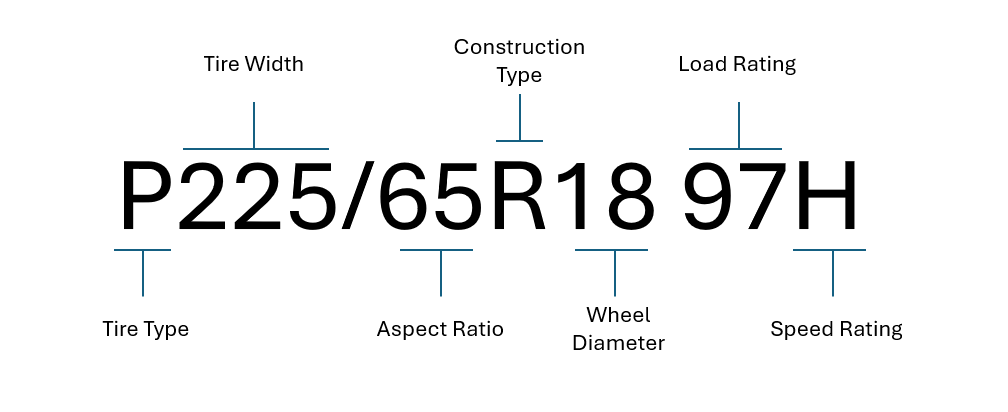
If you’ve ever looked at the side of your tire and wondered what all those letters and numbers mean, you’re not alone. Most drivers see something like P225/65R18 97H and have no idea how to interpret it—yet this information matters when choosing the right tires.
Let’s break it down in simple terms so you know exactly what each part refers to.
What Each Number and Letter Means
P = Tire Type
The first letter tells you what type of tire it is.
| Letter | Meaning |
|---|---|
| P | Passenger Tire |
| LT | Light Truck Tire |
| ST | Trailer Tire |
Most cars and SUVs use P. If there is no letter at all, treat it like P.
225 = Tire Width (in millimeters)
This number is the width of the tire from sidewall to sidewall.
225 mm = about 8.86 inches
- Wider tires = better grip
- Narrower tires = better fuel economy
65 = Aspect Ratio (Sidewall Height %)
This number is confusing at first—because it’s a percentage.
65 means the sidewall height is 65% of the width.
💡 So:
65% × 225 mm = 146.25 mm tall sidewall (about 5.76 inches)
A lower number (like 45 or 50) means:
- lower profile
- sportier look
- firmer handling
A higher number (like 70 or 75) means:
- taller sidewall
- softer ride
- good for rough roads
R = Tire Construction Type
Today, almost all tires are R, which stands for Radial.
Older tires might be:
- D = Bias-ply
- B = Belted
But those are rare now.
So you’ll almost always see R.
18 = Wheel Diameter (in inches)
This is the size of the wheel the tire fits on.
So P225/65R18 fits:
➡ an 18-inch wheel
Important:
⭐ You can change tire width or sidewall height
❗ But wheel diameter must stay the same unless you buy new wheels.
The End of the Code
You may not always see the full version of a tire code with an extra sequence at the end:
👉 P225/65R18 97H
The part after tire size matters too:
97 = Load Index
This tells you how much weight each tire can carry.
Load index 97 ≈ 1,609 lbs per tire
Multiply by four tires = 6,436 lbs total vehicle load
H = Speed Rating
This tells you how fast the tire is designed to handle safely.
| Rating | MPH |
|---|---|
| S | 112 mph |
| T | 118 mph |
| H | 130 mph |
| V | 149 mph |
| W | 168 mph |
| Y | 186 mph |
| Z or ZR | 149+ |
Why Tire Codes Matter When Purchasing New Tires
When replacing your tires, matching size matters because it affects:
- Your speedometer accuracy
- Vehicle handling
- Alignment geometry
- Fit inside the wheel well
- Ride comfort
Even small changes (e.g., switching from 65 to 60 sidewall) affect performance.
What You SHOULD Match Every Time
When buying replacement tires, always match:
- wheel diameter (18)
- tire width (225)
- load rating (97 or higher)
- speed rating (H or higher)
What You CAN Change Safely
Sometimes you can change:
- brand
- tread style
- all-season vs all-weather vs winter
- load rating above original
- speed rating above original
But when in doubt—ask us.
Final Takeaway
When you see P225/65R18 97H, now you know:
- “P” = type of vehicle tire
- “225” = width
- “65” = sidewall height as a percentage
- “R” = radial construction
- “18” = wheel size
- "97" = load rating
- "H" = speed rating
That single code contains everything your vehicle needs to maintain a safe and proper fit.
Want help choosing the right size?
Just send us a photo of your tire info, and we’ll confirm:
- Correct tire size
- Load rating
- Speed rating
- Recommended brands
Then we can install them at your home or office—touch-free and professionally balanced.
J&M Touchless Tire Service delivers dealership-level tire care — anywhere in Colorado Springs, without the wait.