
Tire damage can happen anytime—nails, potholes, road debris, or impact can quickly leave you stranded. But not all tire issues require replacement. Knowing what can be safely repaired on a tire protects you and helps you avoid unnecessary costs. This guide explains which tire damage is fixable, what requires replacement, and how mobile tire repair in Colorado Springs makes the process easy.
Understanding the Different Types of Tire Damage
Tires can sustain several types of damage. Some can be repaired safely—others cannot:
- Punctures from nails or screws
- Sidewall cuts or tears
- Bubbles or bulges from impact
- Tread separation
- Cracks in rubber from age or dryness
Which Tire Damage Can Be Safely Repaired?
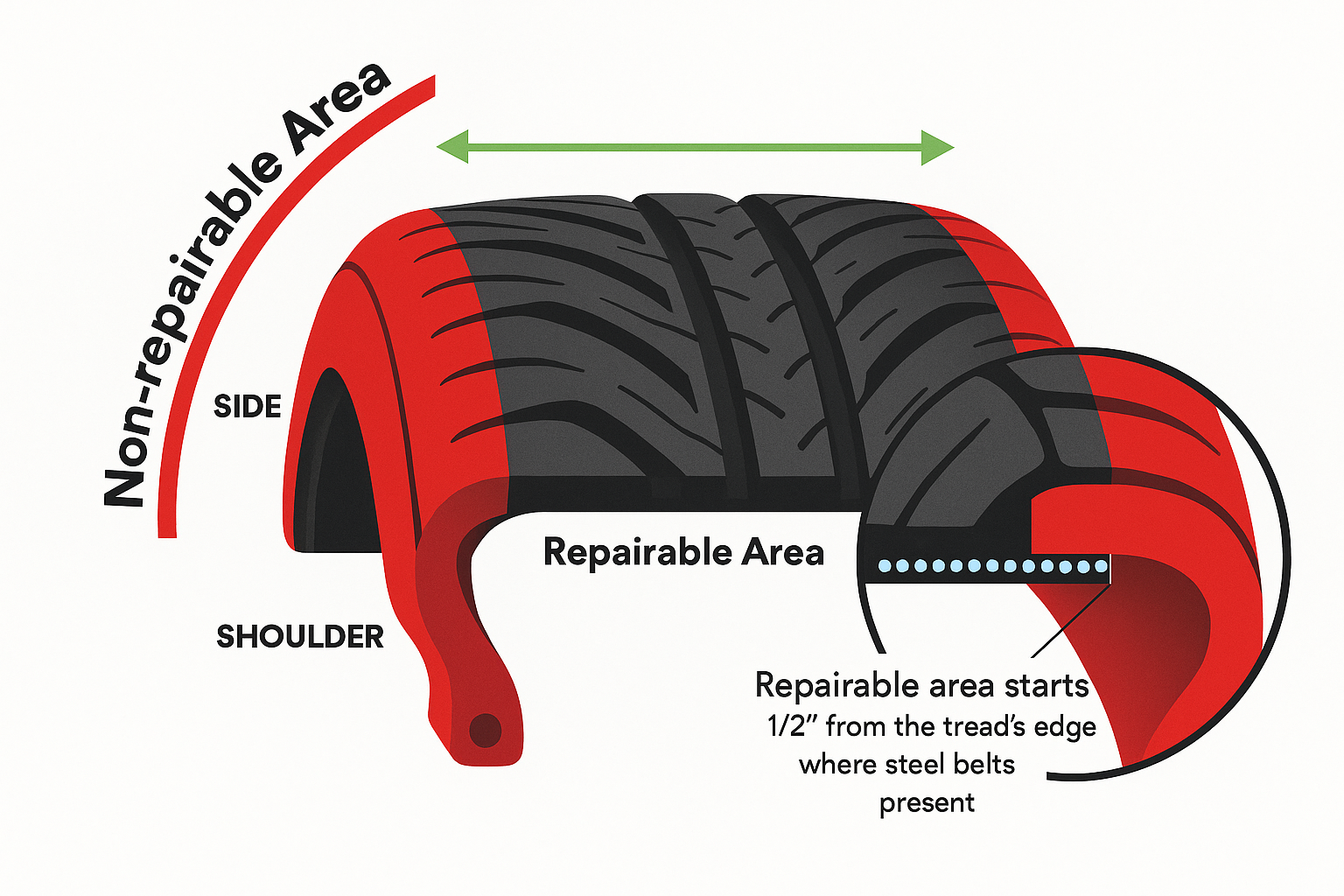
Some tire issues are fully repairable—as long as they fall within industry-safe guidelines. These repairs restore tire integrity, prevent air loss, and maintain safety.
Punctures in the Tread Area
Small punctures ( less than 1/4 inch) within the central tread area can generally be repaired using a patch-plug combination. This is the strongest and safest method, sealing both the inside and outside of the tire.
Embedded Objects (Nails, Screws)
If an object is embedded only in the tread area, it can often be safely repaired—after inspection to ensure the structure isn’t compromised.
What Tire Damage Is NOT Safe to Repair?
Some issues are too dangerous to fix and always require tire replacement:
Sidewall Damage
Cuts, bubbles, or tears in the sidewall affect structural integrity. The sidewall flexes constantly—making it unsafe for repair.
Bubbles or Bulges
A bubble or bulge indicates internal damage from impact. No repair method can restore the internal structure safely.
Large Punctures or Multiple Close Punctures
Holes larger than 1/4 inch or multiple punctures near each other weaken the tire and cannot be safely repaired.
Tread Separation or Deep Cracks
If the tread is separating or the rubber is cracked, the tire is unsafe and must be replaced immediately.
Patch vs Plug vs Patch-Plug Combo: Which Is Best?
- Plug: Quick but not safe alone for long-term use.
- Patch: Applied inside the tire but doesn’t fill the hole.
- Patch-Plug Combo: The safest, industry-approved method.
Professional tire services—including mobile flat tire repair —use patch-plug combos because they restore tire strength and prevent leaks.
When Should You Replace a Tire Instead of Repairing It?
Replace your tire if you notice:
- Bubbles or bulges
- Damage on or near the sidewall
- Severe tread wear or exposed cords
- Multiple punctures or large holes
- Tire repeatedly losing pressure
In these cases, repair is unsafe—and replacement is the only option.
Mobile Tire Repair in Colorado Springs
You don’t need to tow your vehicle or wait in a shop. J&M Touchless Tire Service provides fast, professional mobile tire repair anywhere in Colorado Springs.
Our mobile services include:
- Puncture inspection & repair
- Patch-plug repairs
- Flat tire repair
- Tire replacement and mounting
- Touchless tire installation
- Hunter Road Force Balancing
- On-site tire inspections
We come to your home, workplace, or roadside to get you safely back on the road.
Frequently Asked Questions
Can all tire punctures be repaired?
No. Only small punctures in the center tread area can be safely repaired. Sidewall punctures and large holes require replacement.
Is DIY tire repair safe?
DIY plugs are temporary and may hide internal damage. Professional repair is always safer.
How long does a professional tire repair take?
Most repairs take 20–30 minutes with mobile service.
Is it safe to drive on a repaired tire?
Yes—when repaired professionally with a patch-plug combination.
Need Tire Repair? Let the Shop Come to You.
If you’re unsure whether your tire can be repaired or needs replacement, J&M Touchless Tire Service can inspect and fix the issue on the spot. Schedule your mobile tire repair in Colorado Springs today.


